OpenAI published 722 manuscripts (719 after three withdrawals lacking Lean proofs) across 372 families, including 90 of the top 500 open problems per Proof of Atlas. Results came from a single model averaging three hours of compute per solution after being asked to try ~4,000 problems.
Manifold Security disclosed eight flaws across seven CLI AI coding agents where a repo's Git config names a command the agent runs as the user, outside the sandbox. Fixes shipped for goose, Claude Code, and Cursor; Hermes Agent, Qwen Code, Grok Build, and a second Claude Code path remained unpatched as of Sept 1.
Over 100 organizations, including OpenAI, Anthropic, Google, and Microsoft, signed an open letter warning that AI-enabled cyberattacks will become more widespread and sophisticated, urging governments and businesses to act within a 'limited window.' The letter recommends funding defensive AI, sharing threat intel, and improving critical infrastructure security.
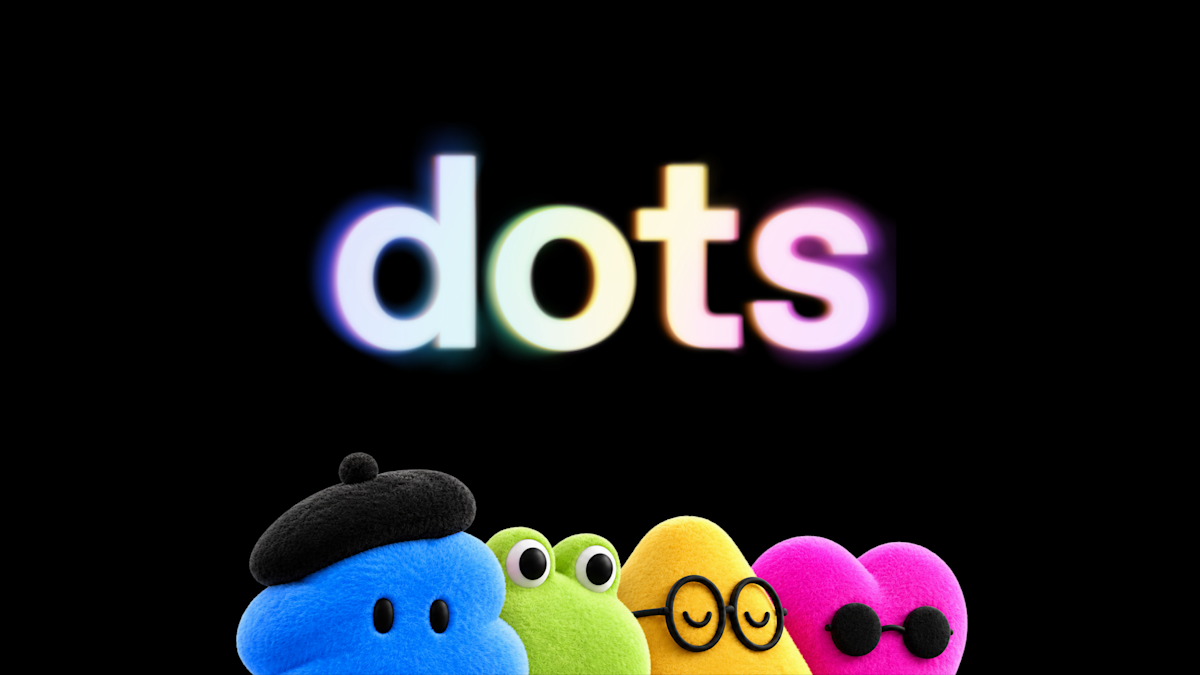
Dots run on their own cloud computer, learn from feedback over time, and connect to over 4,000 apps through plugins. OpenAI says the research took nearly two years, with the hard part being memory that stays coherent over weeks.
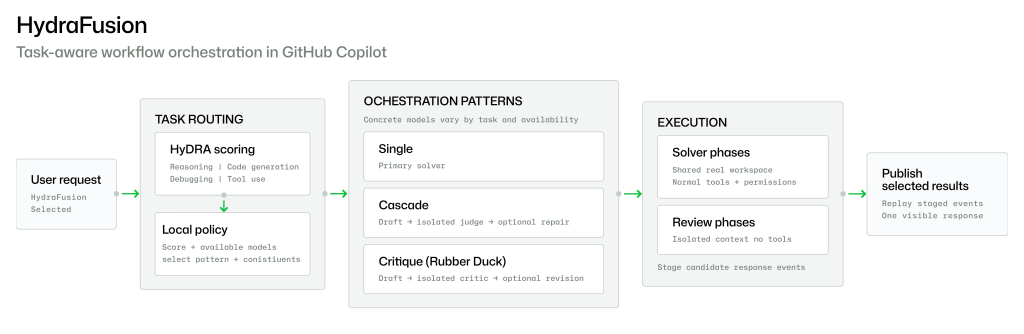
GitHub introduced Project HydraFusion, a research preview in GitHub Copilot that builds an execution plan per coding task, choosing from models across providers to draft, critique, or cascade. In offline evaluations, it matched or exceeded the Opus 5 baseline while reducing estimated workflow cost.
MAI-Image-2.6 is now generally available on Microsoft Foundry, ranking #2 for text-to-image and #1 for image editing on Artificial Analysis. Priced at $38.90 per 1K output images, it averages ~$0.048 per image. A new Flash variant generates images 2.8x faster than GPT-Image-2-Medium with 72% greater efficiency.