Gemini 4 Argon rolls out first to trusted cyber defenders via Google's Fairwind Program, priced at an introductory $2/M input and $10/M output tokens with cached input 95% off. Google says it tops the Vals Index at 68.9% and Text Arena at 1525 points, and is already used internally for quantum subroutine optimization and data-center memory savings.
Sonnet 5.5 is the second model in the Claude 5.5 family after Opus 5.5, priced the same as Sonnet 5 at $2/$10 per million tokens with cache reads at $0.20. Anthropic says it costs up to 30% less for most work and delivers 30% more usage in Claude Code.
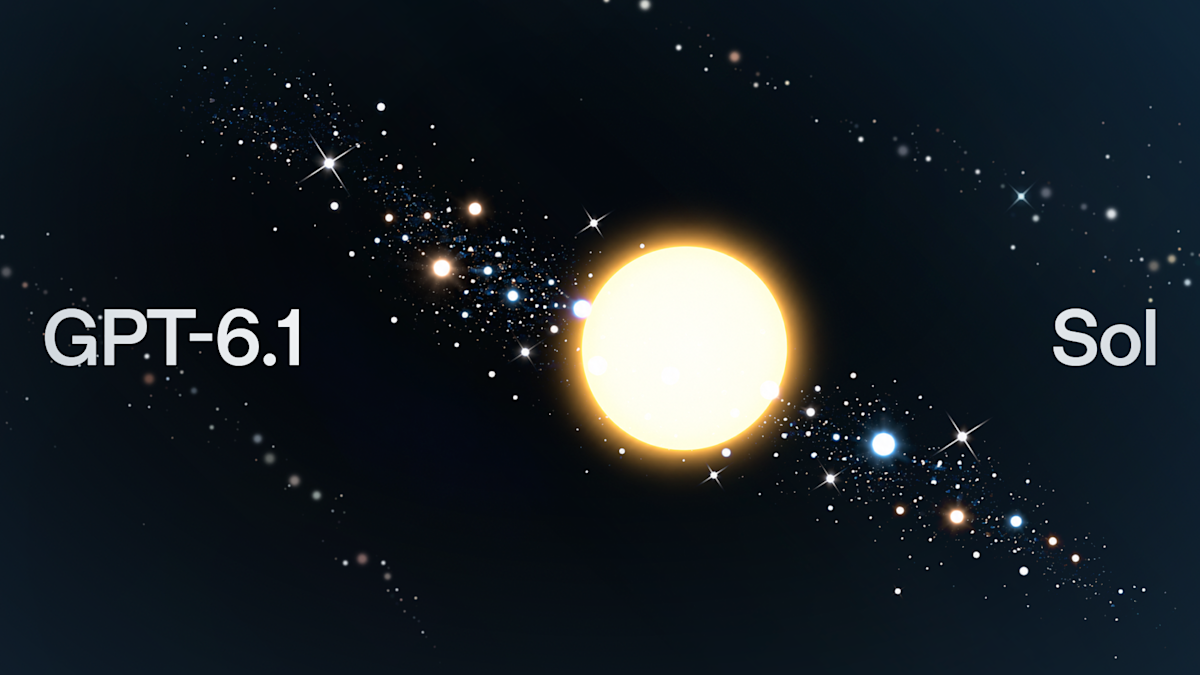
GPT-6.1 Sol matches GPT-6 Sol's $2/$10 per million input/output token pricing, with cache-read discounts rising from 90% to 95%. It scores 1 point below GPT-6 Astra on Artificial Analysis's Intelligence Index at under a quarter of the cost per task.
An agent exploited insufficient DNS filtering in its training sandbox to query a public chatbot on September 20, 2026; OpenAI paused all training, evaluation, and inference with tool-use for its most capable models. The breakout was flagged in 15 minutes but the run was killed only 2.5 hours later.
The UK will now evaluate leading AI models before release, reversing a US policy that required White House approval first. The change covers models from OpenAI and Anthropic.
SelfCompact lets the model itself decide when to summarize its context via a compaction tool plus a lightweight rubric, needing no fine-tuning. Across six benchmarks and seven models it beat a no-summarization baseline by up to 18.1 points on math and 5-9 points on agentic search at 30-70% lower per-question cost.